I have moved groups now as we thought I would work better with my new group.
This is their first cut:
The improvements for their first cut are:
-To include a shot reverse shot(over the shoulder)
-To include match on action
-The 180 degree rule was broken at 00:00:51
-More varied angles need to be used
-The framing needs improving. In one scene the top of her head was cut off and so was her chin.
Wednesday, 18 December 2013

Monday, 16 December 2013
Continuity Task - First Cut
This is our first attempt at our continuity editing task. We are going to have to film another one as there are quite a few improvments we need to make. In our extreme close up, which was the establishing shot we didn't focus on one part of the head and also we cut off the top of her head in the shot after that. We also didn't include any match on action and our shot reverse shot wasn't done to the best of our ability. These are the main things we are going to have to focus on when we re film it. It is important that we pick out our weaknesses now as when it comes to making the real thing we have had practice and we know what we need improve on.
Friday, 13 December 2013
Typography


Above are some fonts that can be used in thrillers,usually used for the title of the film. In the title sequence they also use quite simple/minimalistic fonts for names in the opening, some of the minimalistic texts are animated with the style of the movie.
We are thinking of using,the ALCATRAZ.ISLAND.CA.FONT as its professional looking and fits into the genre,psychological thriller. We ended up with this font as we watched the Shutter island opening and like the font used, we then decided we would use a simple but eye grabbing bold font.
We ended up with the ALXATRAZ.ISLAND font, this font is similer to shutter islands but slighty modified. The other fonts we looked at also would not have fitted in with the possible story lines we had chosen.
Possible movie titles using the chosen font:
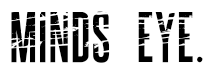


Finding out about typography is useful because we know what types of fonts are used in thrillers and when it comes to making our opening we have already got a good idea of what font we are going to use.
Thursday, 12 December 2013
The Evaluation Questions
In the evaluation the following questions must be answered:
• In what ways does your media product use, develop or challenge forms and conventions of real media products?
• How does your media product represent particular social groups?
• What kind of media institution might distribute your media product and why?
• Who would be the audience for your media product?
• How did you attract/address your audience?
• What have you learnt about technologies from the process of constructing this product?
• Looking back at your preliminary task, what do you feel you have learnt in the progression from it to the full product?
• In what ways does your media product use, develop or challenge forms and conventions of real media products?
• How does your media product represent particular social groups?
• What kind of media institution might distribute your media product and why?
• Who would be the audience for your media product?
• How did you attract/address your audience?
• What have you learnt about technologies from the process of constructing this product?
• Looking back at your preliminary task, what do you feel you have learnt in the progression from it to the full product?
It is useful for me to know these questions now as while I do each peice of work I can do a small evaluation of it, then when it comes to the real evaluation I can just expand on what I have already done instead of going through all my work again.
Wednesday, 4 December 2013
Continuity Editing Task

Saturday, 30 November 2013
Film Noir
This was researched by someone else in my group:
Film Noir beginning in the early 1940s was one of Hollywood's original, artistic movements. Being inspired by American crime fiction and mostly brought to the screens by European directors who shared a story telling gift. Fritz Lang, Robert Siodmak, Billy Wilder, and Otto Preminger were further creators of the film noir style.
During and immediately following World War II, movie audiences responded well to this original, creative and adult type of film. Many writers, directors, cameramen and actors were eager to create something as new and fresh as this idea. Largely fueled by the financial and artistic success of Billy Wilder’s adaptation of James M. Cain’s novella Double Indemnity (1944), people starting coming out with new crime thrillers and murder dramas to heighten intensity and darkness in the film industry.
Few, if any of the artists in Hollywood who made these films called them “noir” at the time. But the vivid co-mingling of lost innocence, doomed romanticism, hard-edged cynicism, desperate desire, and shadowy sexuality that was unleashed in those immediate post-war years proved hugely influential, both among industry peers in the original era, and to future generation of storytellers, both literary and cinematic.
To this day the debate goes on as to whether “noir” is a film genre, circumscribed by its content, or a style of storytelling, identified by its visual attributes. The debate — in which there is no right answer — is only one of the things that keeps noir fresh for successive generations of movie lovers.
Response to comments: From all of this I can understand that film noir was a budget film for post war purposes however it went down well with the majority of audiences. It is not a common film genre used these days so if we used it for our film opening people may like it because it is something new that they haven't seen for a while. It might draw in a wider audience because it is new and interesting. I think people will enjoy the fact that it is an old film technique(black and white) which is being used to create a modern film for example the film The Artist, which used the same kind of style as film noir, released in 2011 was very popular and won 5 oscars which shows that something different appeals to the audience.
Wednesday, 27 November 2013
Sound and Editing used in Thrillers
Sound:
Sound is used in thrillers to help the audiences understanding of what is going on. Sounds are used to evoke characters feelings and emotions and get a response from the audience. It is also often used to symbolise both the protagonists and antagonists movements in the scene. By carefully using the sounds employed in the scene it creates the right mood and atmosphere and in the context of the thriller genre, helps to build suspense and tension.Thrillers are typically noisy and they uses lots of diegetic sound throughout the film. Common sounds include bangs, ticking and screams, they use these sounds to build tension and to create suspense. These sounds are normally heard by both the audience and the characters and they are normally very jumpy. Non diegetic sound is also used in thrillers. They sometimes use a steady drone which puts the audience at unease. Also as the action increases in the film and the tension builds the music speed up and increases in unison. Hitchcock used sound in a very new way than was typical at the time. For instance in Blackmail he demonstrates ongoing tactics, such as: withholding sound from the viewer to pique curiosity which is shown in the murder scene http://www.youtube.com/watch?v=POMvKwfBVWo, there is no sound during the murder and we can’t see what is happening which leaves us wondering what exactly is going on. It subverts our expectations of a murder as we would expect lots of screams but we don’t get anything. He also exaggerates sound as a form of narrative emphasis and creating tension through both ambient noises and silence. Further, in a world where music was the dominant form of narrative accompaniment, he stripped music score away from his scenes and instead used the act of singing (and whistling) as a suspense device. Lastly, Hitchcock’s manipulation of human speech ranged from technical malfunctions of telephone calls to dizzied audio abstraction of the characters’ subjective thoughts.
Editing:
To create tension thrillers use pace. Fast cutting can help to create suspense. The pace of the shots usually go in unison with the music. Cross cutting is a common editing technique used cutting between the victim and their threat. This sequence normally ends when the two individuals or groups meet in a final climax. http://www.youtube.com/watch?v=KmptU7vEkNU . This clip from inception is an example of cross cutting. The editing creates tension in the film because we see the same character in two different places going through dangerous things in both places. His life is in danger in both places which creates tension for the viewer because we don't know if he is going to survive in both of the situations. Motivated cuts are often used in thrillers to make the audience want to see what happens next. A motivated cut is when a character is looking out of shot with an expression on her face that makes the audience want to see what she is seeing. This is a very good technique to use and an example of this is in the film The Silence of the Lambs when the women is looking at the board and it makes the audience want to see what she is looking at.
We will most probably use some of these techniques in our film opening because they are commonly used in thrillers so this would help us to acheive some of the codes and conventions of a thriller.
To create tension thrillers use pace. Fast cutting can help to create suspense. The pace of the shots usually go in unison with the music. Cross cutting is a common editing technique used cutting between the victim and their threat. This sequence normally ends when the two individuals or groups meet in a final climax. http://www.youtube.com/watch?v=KmptU7vEkNU . This clip from inception is an example of cross cutting. The editing creates tension in the film because we see the same character in two different places going through dangerous things in both places. His life is in danger in both places which creates tension for the viewer because we don't know if he is going to survive in both of the situations. Motivated cuts are often used in thrillers to make the audience want to see what happens next. A motivated cut is when a character is looking out of shot with an expression on her face that makes the audience want to see what she is seeing. This is a very good technique to use and an example of this is in the film The Silence of the Lambs when the women is looking at the board and it makes the audience want to see what she is looking at.
We will most probably use some of these techniques in our film opening because they are commonly used in thrillers so this would help us to acheive some of the codes and conventions of a thriller.
Subscribe to:
Posts (Atom)